About That Insane House of X Retcon (Spoilers)
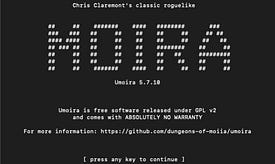
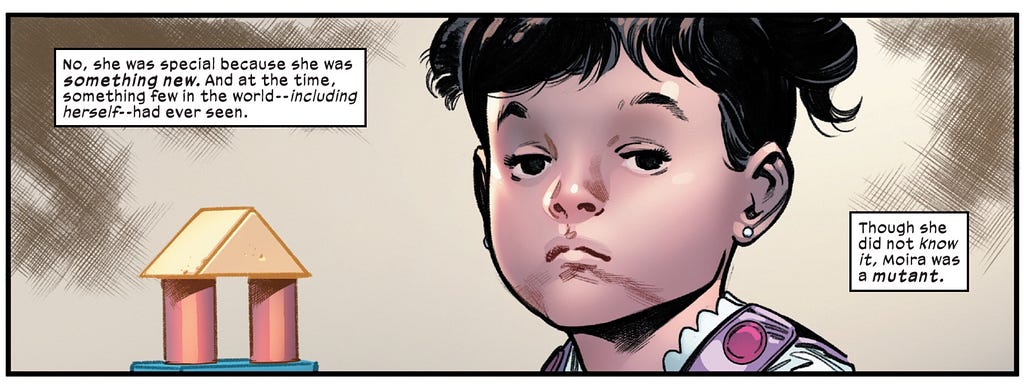
The second issue of Jonathan Hickman and Pepe Larraz’s House of X contains what, in my fairly lengthy history of superhero comics reading, might be the single most audacious retcon I’ve encountered: the idea that longtime X-Men token human ally Moira Kinross MacTaggert not only has been a mutant all along, but that her mutant power is reincarnation: not in the Buddhist sense where she comes back in another form, but in in the Groundhog Day/Russian Doll sense, where Moira MacTaggert’s mutant power is to be stuck playing a roguelike forever.
 That feeling when you get socks for Christmas
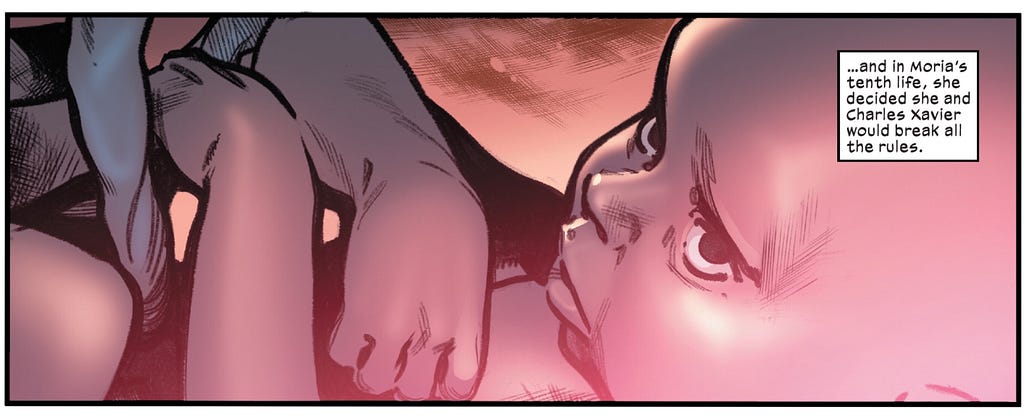
She’s on her tenth life – hence making her Moira X, for ten – and there are going to be at least five miniseries released in a few years exploring these time periods, especially the one where she turns into an avenging angel of sniping death to kill the entire Trask bloodline in a futile attempt to stop the creation of artificial intelligence and, therefore, the creation of the mutant-hunting Sentinels. It’s a weighty and risky story, especially for such a major property, to deal with questions of oppression and revolution and radicalization and marginalization this matter-of-factly, and I’m really excited to hear how people from other backgrounds react to what this story brings to the table.What really strikes me, though – and what I want to talk about here – is to dig into just how meticulously crafted this timeline cross-stitch is. The more I think about it, the more I’m struck by how carefully it’s constructed to be completely additive, methodically assuaging fears and concerns about this retcon’s effect on history without sacrificing the story’s momentum for an exposition dump (except, of course, until the very end).
Although this story explicitly mentions the observer effect, the fact of the matter is that in her second life, the X-Men got all the way to the Morrison/Quitely period without her involvement (and, supposedly, without the existence of Muir Island, which is somewhat harder to believe). The story goes out of its way to show that things only change from the ‘base’ timeline if she acts to cause that change; this establishes, out of the box, that the entire history of X-Men stories that you know before this revelation is still completely valid. Any behavior change in Xavier caused from Moira’s opening up to him couldn’t have affected events as we know them, since they occurred in that form in the base timeline. The only stories affected by this retcon are the ones with Moira’s involvement. The door is forever closed on the possibility, both in the readers’ minds and for future writers, to imply that Moira somehow caused the Dark Phoenix Saga behind the scenes, or that Xavier let Cassandra Nova take him over to further his and Moira’s secret plan. The motivations and interiority of the characters are all still valid; Xavier’s Dream was explicitly real on its own without Moira’s involvement, and the history of the X-Men as we know them up to his moment is intact.
 #Goals
The fact is, though, Xavier’s dream seems woefully impotent and outdated today. While the entirety of history is respected and extant, this allows Xavier to evolve with the times, and for the expansion of the Xavier/Magneto relationship into a true triumvirate, firmly establishing Moira as the third major figure and founder of modern mutantdom. This is where we start entering into the second extremely clever facet of this retcon: the way in which it allows Hickman to inspect the purpose and mission of the X-Men in 2019 and reinvent it with its chief dreamers still at the lead, but with more nuanced, updated dreams, whatever they may be. The Xavier/Magneto MLK/Malcolm X comparison was flawed to begin with and has only grown more and more laughably outdated with every passing year, especially as history and society march on and the lies many of us told ourselves about the inexorable march of positive progress dissolve under the cold, hard weight of Trump, Bolsonaro, Duterte and Brexit. This allows for a full reexamination and updating of what being different, being feared and hated, and also being the future means.
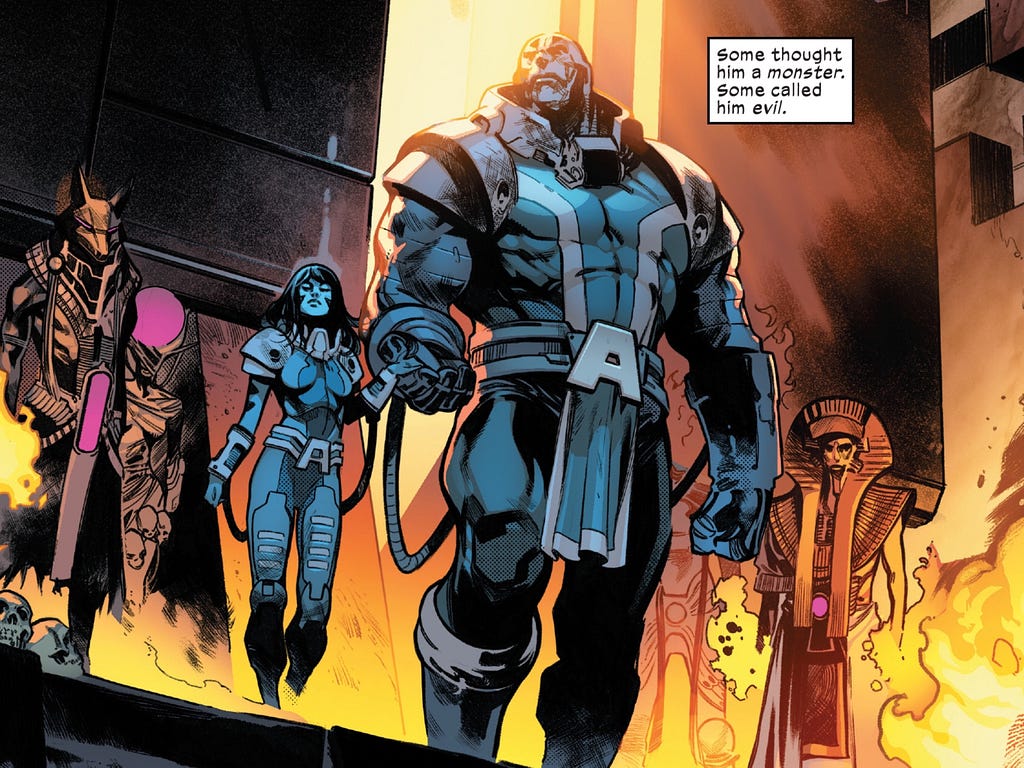
Additionally, there’s an additional impressive meta angle: Moira’s journey through her lives are the journey any X-Men writer must go through coming onto the title, trying to come up with a new way forward from the cycle of foundation, detection and relocation that’s defined the franchise for so long. She goes from life to life, trying new ideas – founding a mutant nation, trying to give Magneto dominion over the world, establishing a nightmare future with Apocalypse – that probably seem familiar to anyone who’s been reading the past few decades of X-titles, echoing the franchise’s own attempts to reinvent and reestablish itself, to find a way forward for mutantkind. In the end, what Moira – and, by extension, Hickman – promise us is to change all the rules. I’m incredibly excited to see what that means.
- jonathan-hickman
- house-of-x
- pepe-larraz
- x-men